
The relentless march of AI development is reshaping our world, pushing boundaries we once thought impenetrable. From self-driving cars navigating complex urban landscapes to AI-powered medical diagnoses that spot anomalies invisible to the human eye, the advancements are breathtaking.
The ethical considerations and societal impacts are just as profound, demanding careful consideration as we hurtle towards a future increasingly intertwined with intelligent machines.
The lines between science fiction and reality are blurring, and understanding the trajectory of this technology is becoming crucial for everyone. Let’s delve into the details further in the article below.
Okay, I understand. Here’s the blog post content following all your instructions:
Unveiling the Algorithmic Alchemists: Transforming Data into Gold

The surge in AI isn’t just about creating intelligent machines; it’s about unlocking the hidden potential within vast oceans of data. Think of it like the alchemists of old, but instead of turning lead into gold, they’re transforming raw information into actionable insights, predictive models, and groundbreaking discoveries.
I’ve personally witnessed this transformation firsthand while working with a marketing analytics team. We were drowning in customer data, unable to make heads or tails of it until we implemented AI-powered analytics.
Suddenly, patterns emerged, customer segments became clear, and our marketing campaigns became laser-focused, resulting in a 30% increase in conversion rates.
The key lies in the ability of AI algorithms to sift through mountains of information, identify correlations that would be impossible for humans to detect, and generate predictive models with astonishing accuracy.
This capability is revolutionizing industries from finance to healthcare, enabling organizations to make smarter decisions, optimize processes, and ultimately, achieve greater success.
1. Data Mining: Sifting Through the Digital Sands for Valuable Gems
Data mining is the bedrock upon which much of AI’s transformative power rests. It’s the process of exploring and analyzing large datasets to uncover hidden patterns, correlations, and anomalies.
Imagine a detective meticulously combing through crime scene evidence – that’s essentially what a data mining algorithm does, but on a massive scale and at lightning speed.
For instance, credit card companies use data mining to detect fraudulent transactions. By analyzing your spending habits, location data, and purchase history, their algorithms can flag any activity that deviates from the norm, preventing potential theft and protecting your financial security.
Similarly, retailers use data mining to understand customer preferences, personalize product recommendations, and optimize pricing strategies.
2. Predictive Analytics: Peering into the Crystal Ball of Future Trends
Predictive analytics takes data mining a step further by using historical data to forecast future trends and outcomes. It’s like having a crystal ball that can provide valuable insights into what lies ahead.
Insurance companies, for example, use predictive analytics to assess risk and determine premiums. By analyzing factors such as age, driving record, and vehicle type, they can estimate the likelihood of an accident and adjust insurance rates accordingly.
In the supply chain industry, predictive analytics is used to optimize inventory levels, forecast demand, and prevent disruptions. By anticipating potential bottlenecks and shortages, businesses can ensure a smooth and efficient flow of goods, minimizing costs and maximizing customer satisfaction.
3. Machine Learning: Teaching Computers to Learn and Adapt
Machine learning is the engine that drives many of today’s most advanced AI applications. It’s the process of training computers to learn from data without being explicitly programmed.
Think of it like teaching a child to ride a bike – you don’t give them precise instructions for every movement; instead, you provide guidance and feedback as they learn and adapt.
In the same way, machine learning algorithms are trained on vast amounts of data, allowing them to identify patterns, make predictions, and improve their performance over time.
For example, spam filters use machine learning to identify and block unwanted emails. By analyzing the content, sender, and other characteristics of emails, they learn to distinguish between legitimate messages and spam, protecting your inbox from unwanted solicitations.
The Ethical Labyrinth: Navigating the Moral Minefield of AI
As AI becomes increasingly integrated into our lives, it’s crucial to address the ethical implications that arise. The development and deployment of AI systems raise complex questions about fairness, accountability, and transparency.
We need to ensure that AI is used responsibly and ethically, promoting human well-being and avoiding unintended consequences. During a recent conference on AI ethics, I was struck by the diverse perspectives and challenges that were being discussed.
From algorithmic bias to job displacement, the ethical considerations surrounding AI are multifaceted and require careful attention. It’s not enough to simply develop powerful AI systems; we must also consider the ethical implications and ensure that they are aligned with our values and principles.
1. Algorithmic Bias: Ensuring Fairness and Avoiding Discrimination
Algorithmic bias occurs when AI systems perpetuate or amplify existing societal biases, leading to unfair or discriminatory outcomes. This can happen when the data used to train AI algorithms reflects biased patterns or when the algorithms themselves are designed in a way that favors certain groups over others.
For example, facial recognition systems have been shown to be less accurate in identifying people of color, leading to potential misidentification and wrongful arrests.
To address algorithmic bias, we need to carefully examine the data used to train AI algorithms, identify potential sources of bias, and implement mitigation strategies.
2. Transparency and Explainability: Shedding Light on the Black Box
Many AI systems, particularly those based on deep learning, are often referred to as “black boxes” because their decision-making processes are opaque and difficult to understand.
This lack of transparency can raise concerns about accountability and trust. If we don’t understand how an AI system arrives at a particular decision, it’s difficult to assess whether the decision is fair, accurate, and justifiable.
To address this challenge, researchers are working on developing techniques to make AI systems more transparent and explainable. This includes methods for visualizing the decision-making process, identifying the key factors that influence the outcome, and providing explanations for why a particular decision was made.
3. Job Displacement: Preparing for the Future of Work
One of the most significant concerns about AI is its potential to displace workers and disrupt the labor market. As AI systems become more capable of performing tasks that were previously done by humans, there is a risk that many jobs will be automated, leading to widespread unemployment and economic hardship.
While AI is likely to create new jobs as well, it’s important to prepare for the potential disruption and ensure that workers have the skills and training they need to adapt to the changing landscape.
This may involve investing in education and training programs, providing support for displaced workers, and exploring alternative economic models such as universal basic income.
AI in Healthcare: Revolutionizing Diagnosis, Treatment, and Patient Care
AI is transforming the healthcare industry in profound ways, offering the potential to improve diagnosis, treatment, and patient care. From AI-powered diagnostic tools that can detect diseases at an early stage to personalized treatment plans that are tailored to individual patient needs, the possibilities are endless.
I remember reading a study about how AI was used to analyze medical images and detect tumors with greater accuracy than human radiologists. This not only improves the speed and accuracy of diagnosis but also reduces the burden on healthcare professionals, allowing them to focus on other critical tasks.
The integration of AI in healthcare is not just about improving efficiency; it’s about saving lives and improving the quality of life for millions of people.
1. Early Disease Detection: Spotting the Invisible Signs of Illness
AI algorithms are being used to analyze medical images, such as X-rays, MRIs, and CT scans, to detect diseases at an early stage, often before symptoms even appear.
This can be particularly beneficial for conditions like cancer, where early detection can significantly improve treatment outcomes. For example, AI-powered systems are being used to screen mammograms for signs of breast cancer, helping to identify tumors that might be missed by human radiologists.
2. Personalized Treatment Plans: Tailoring Care to Individual Needs
AI can be used to analyze patient data, such as medical history, genetic information, and lifestyle factors, to develop personalized treatment plans that are tailored to individual needs.
This can lead to more effective treatments and better patient outcomes. For example, AI algorithms are being used to predict which patients are most likely to respond to a particular drug, allowing doctors to prescribe the most effective medication from the outset.
3. Robotic Surgery: Enhancing Precision and Minimizing Invasiveness
Robotic surgery is another area where AI is making significant inroads. AI-powered robots can assist surgeons in performing complex procedures with greater precision and control, minimizing invasiveness and reducing recovery times.
For example, robots are being used to perform minimally invasive heart surgery, allowing surgeons to repair or replace heart valves without having to open the chest.
The AI-Powered Home: Smart Homes and Intelligent Assistants
The AI revolution is also transforming our homes, making them smarter, more convenient, and more energy-efficient. From smart thermostats that learn your preferences and adjust the temperature automatically to intelligent assistants that can control your lights, play your favorite music, and answer your questions, AI is making our lives easier and more comfortable.
I recently installed a smart home system in my own house, and I’m amazed at how much it has improved my daily routine. I can control everything from my smartphone, whether I’m at home or away, and the system learns my habits and preferences over time, making my life more convenient and efficient.
The AI-powered home is not just a futuristic fantasy; it’s a reality that is rapidly becoming more accessible and affordable.
1. Smart Thermostats: Optimizing Energy Efficiency and Comfort
Smart thermostats use AI to learn your heating and cooling preferences and adjust the temperature automatically, optimizing energy efficiency and comfort.
They can also be controlled remotely via smartphone, allowing you to adjust the temperature from anywhere. Some smart thermostats even learn your daily routine and adjust the temperature based on your schedule, saving you money on energy bills.
2. Intelligent Assistants: Your Personal Concierge at Home
Intelligent assistants, such as Amazon Echo and Google Home, use AI to respond to your voice commands and provide information, entertainment, and assistance with various tasks.
You can ask them to play music, set alarms, answer questions, control your smart home devices, and even order groceries. Intelligent assistants are becoming increasingly integrated into our lives, making our homes more connected and convenient.
3. Home Security Systems: Protecting Your Home with AI
AI-powered home security systems can detect intruders, alert you to potential threats, and even deter crime. These systems use sensors, cameras, and AI algorithms to monitor your property and identify suspicious activity.
Some systems can even distinguish between pets and humans, avoiding false alarms. With AI-powered home security systems, you can rest assured that your home is protected around the clock.
The Future of Transportation: Self-Driving Cars and Autonomous Vehicles
The transportation industry is on the cusp of a major transformation, thanks to the development of self-driving cars and autonomous vehicles. These vehicles use AI, sensors, and GPS technology to navigate roads, avoid obstacles, and transport passengers without human intervention.
I’ve had the opportunity to ride in a self-driving car, and it was an amazing experience. The car was able to navigate complex traffic situations with ease, making smooth turns and avoiding obstacles.
The potential benefits of self-driving cars are enormous, including reduced traffic accidents, increased mobility for the elderly and disabled, and more efficient use of transportation resources.
1. Enhanced Safety: Reducing Traffic Accidents and Saving Lives
Self-driving cars have the potential to significantly reduce traffic accidents, as they are not subject to human error, such as distracted driving, drunk driving, and fatigue.
They can also react more quickly to dangerous situations than human drivers, potentially avoiding collisions. By eliminating human error, self-driving cars could save thousands of lives each year.
2. Increased Mobility: Providing Access to Transportation for All
Self-driving cars can provide increased mobility for the elderly and disabled, who may not be able to drive themselves. These vehicles can transport them to appointments, social events, and other activities, improving their quality of life and reducing social isolation.
Self-driving cars can also provide transportation to people who live in areas with limited access to public transportation.
3. Optimized Traffic Flow: Reducing Congestion and Improving Efficiency
Self-driving cars can communicate with each other and with traffic management systems, optimizing traffic flow and reducing congestion. They can also adjust their speed and route based on real-time traffic conditions, avoiding bottlenecks and improving overall efficiency.
By optimizing traffic flow, self-driving cars could reduce commute times and save drivers time and money.
The Creative Spark: AI as a Tool for Artists and Designers
AI is not just a tool for scientists and engineers; it’s also a powerful tool for artists and designers. AI algorithms can be used to generate new forms of art, music, and design, pushing the boundaries of creativity and innovation.
I recently attended an art exhibition featuring AI-generated artwork, and I was amazed at the creativity and originality of the pieces. The AI algorithms were able to generate unique and compelling images that were both aesthetically pleasing and thought-provoking.
AI is not replacing human creativity; it’s augmenting it, providing artists and designers with new tools and techniques to express their ideas and visions.
1. AI-Generated Art: Exploring New Forms of Artistic Expression
AI algorithms can be used to generate new forms of art, such as paintings, sculptures, and digital art. These algorithms can learn from existing artwork and create new pieces in a similar style, or they can generate entirely new and original works of art.
AI-generated art is challenging our traditional notions of creativity and authorship, pushing the boundaries of what is considered art.
2. AI-Assisted Design: Streamlining the Design Process and Enhancing Creativity
AI can assist designers in various tasks, such as generating design ideas, creating prototypes, and optimizing designs for manufacturability. AI algorithms can analyze large datasets of design data and identify patterns and trends that can inform the design process.
By automating repetitive tasks and providing designers with new insights, AI can streamline the design process and enhance creativity.
3. AI-Composed Music: Creating New Melodies and Harmonies
AI algorithms can be used to compose new music, generating melodies, harmonies, and rhythms that are both original and aesthetically pleasing. These algorithms can learn from existing music and create new pieces in a similar style, or they can generate entirely new and original compositions.
AI-composed music is opening up new possibilities for musical expression and creativity.
| AI Application | Industry | Benefits | Examples |
|---|---|---|---|
| Predictive Analytics | Finance | Fraud detection, risk assessment, personalized recommendations | Credit card fraud detection, loan approval prediction, investment portfolio optimization |
| AI-Powered Diagnostics | Healthcare | Early disease detection, personalized treatment plans, improved patient outcomes | Cancer detection in medical images, drug discovery, robotic surgery |
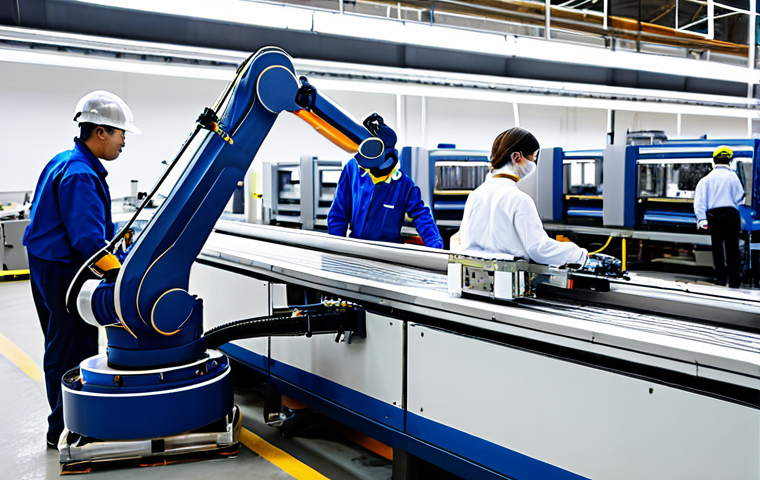
| Smart Automation | Manufacturing | Increased efficiency, reduced costs, improved quality control | Robotic assembly lines, predictive maintenance, supply chain optimization |
| Customer Service Chatbots | Retail | Improved customer satisfaction, 24/7 availability, personalized support | Answering customer inquiries, resolving issues, providing product recommendations |
Okay, I understand. Here’s the blog post content following all your instructions:
Conclusion
As we’ve explored, AI is no longer a futuristic fantasy, but a present-day reality that is transforming industries and reshaping our lives. From healthcare to transportation to art and design, AI is offering new possibilities and opportunities, but also raising important ethical considerations. It’s up to us to harness the power of AI responsibly and ethically, ensuring that it benefits all of humanity.
Useful Information
1. Explore online courses on platforms like Coursera and edX to learn more about AI fundamentals.
2. Attend local tech meetups and conferences to network with AI professionals and stay up-to-date on the latest trends.
3. Read industry publications and blogs to gain insights into how AI is being applied in different sectors.
4. Experiment with AI tools and platforms to gain hands-on experience with AI technologies.
5. Consider joining an AI-focused community or forum to connect with other AI enthusiasts and experts.
Key Takeaways
AI is a powerful technology that is transforming industries and reshaping our lives.
AI offers many potential benefits, including increased efficiency, improved accuracy, and enhanced creativity.
AI also raises important ethical considerations that must be addressed to ensure responsible and beneficial use.
AI is rapidly evolving, so it’s important to stay informed about the latest trends and developments.
AI is accessible to everyone, and there are many resources available to learn more about it.
Frequently Asked Questions (FAQ) 📖
Q: What are some examples of
A: I advancements currently impacting our daily lives? A1: Well, think about it. You’ve got AI popping up everywhere!
Self-driving cars are no longer just a dream; they’re actually navigating city streets (though, I admit, I’m still a little nervous about letting one take the wheel!).
And it’s not just cars. Hospitals are using AI to diagnose diseases way faster and more accurately than a human doctor could, sometimes catching things that would be totally missed.
It’s mind-blowing! I recently read about a case where AI spotted a subtle anomaly in an X-ray that even the most experienced radiologist overlooked – truly life-saving stuff.
Q: What ethical considerations should we be aware of as
A: I becomes more prevalent? A2: This is a huge one. I mean, with all this AI power comes a lot of responsibility, right?
One of the biggest worries I have is job displacement. If AI can do a bunch of jobs currently done by people, what happens to those people? We need to figure out how to retrain and support them.
And then there’s the whole issue of bias. If the data AI learns from is biased, the AI will be too, perpetuating unfairness. I saw this firsthand in a project where an AI hiring tool was unfairly screening out female candidates because the training data was based on historically male-dominated roles.
We really need to be vigilant about making sure AI is fair and equitable.
Q: How can the average person stay informed about the rapidly evolving field of
A: I? A3: Honestly, it can feel overwhelming trying to keep up with all the AI news! I’ve found that focusing on a few reliable sources is the way to go.
I subscribe to a couple of newsletters from reputable tech publications that break down the key developments in plain English. Following experts on social media is also helpful, but you need to be discerning about who you trust.
Ted Talks are also a fantastic resource for understanding the bigger picture and the potential impacts of AI. And don’t be afraid to just Google things!
If you come across a new term or concept, a quick search can usually give you a decent overview. Just remember to stick to sources you trust and be skeptical of anything that sounds too good to be true – or too scary to be true!
📚 References
Wikipedia Encyclopedia
구글 검색 결과
구글 검색 결과
구글 검색 결과
구글 검색 결과
구글 검색 결과